
PREDICTIVE MMM MODELLING FOR OPTIMAL RESOURCE ALLOCATION
EDA
PYTHON
LINER REGRESSION
PROPHET
The project focused on Marketing Mix Modeling (MMM). MMM is a statistical analysis technique used to quantify the impact of various marketing tactics on sales and then predict the impact of future marketing campaigns.
Objective: Develop a predictive MMM model to analyze the effectiveness of different marketing channels in driving revenue and provide actionable insights for optimizing marketing spend.
The main goal is to determine the most efficient way to allocate resources (budget, time, personnel) across various marketing channels to maximize overall return on investment (ROI).
Approach: This project involves formulating the resource allocation as an optimization problem where the objective is to maximize ROI or achieve other predefined business objectives (e.g., maximize revenue, increase customer acquisition, improve brand awareness) subject to constraints (e.g., budget constraints, channel capacity constraints).
Through this Project, I have developed skills at :
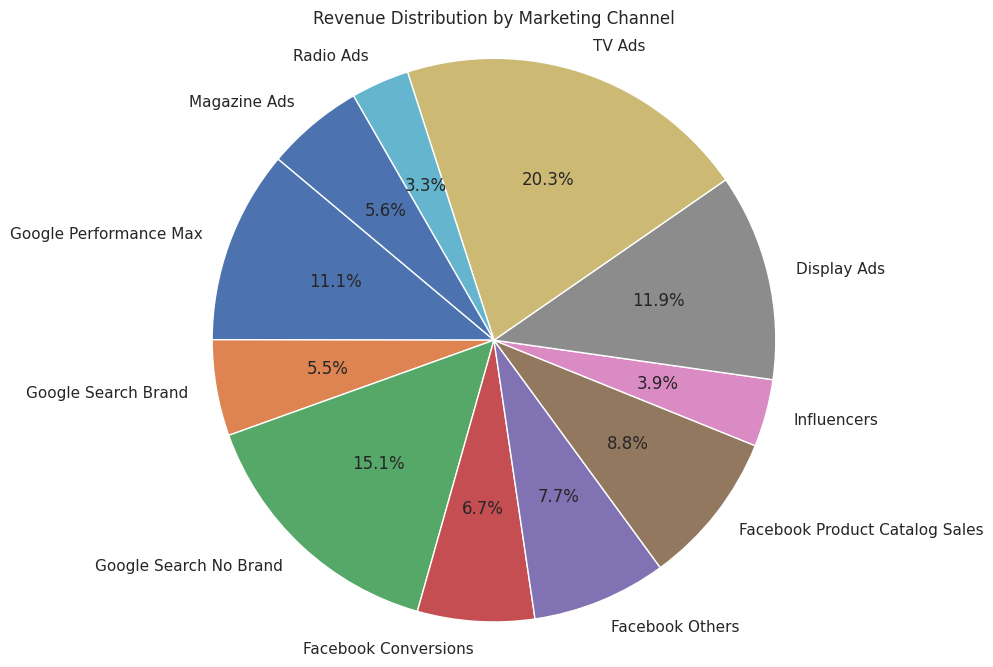
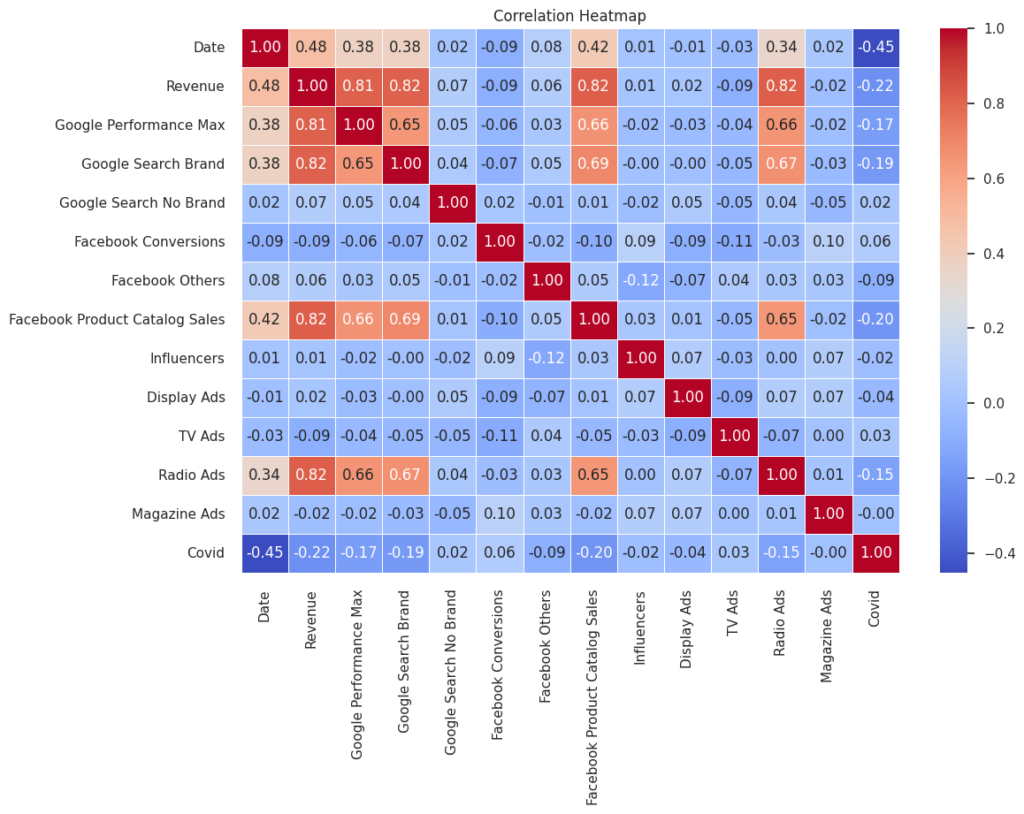
- Data Preprocessing: Check for missing values and handle them appropriately (e.g., imputation). Convert the ‘Date’ column to datetime format for time-series analysis. Explore the distribution of each marketing channel’s spend and revenue. Visualize the relationships between marketing spend and revenue over time.
- Feature Engineering: Create additional features such as lag variables to capture any time-dependent patterns. Consider interactions between marketing channels to account for synergistic effects.
- Model Building: Split the dataset into training and testing sets, considering a suitable time period for each. Select a regression model suitable for MMM (e.g., linear regression, time-series models like SARIMA or Prophet). Train the model using the training set, considering different combinations of features. Evaluate model performance on the testing set using metrics like R-squared, Mean Absolute Error (MAE), and Mean Squared Error (MSE).
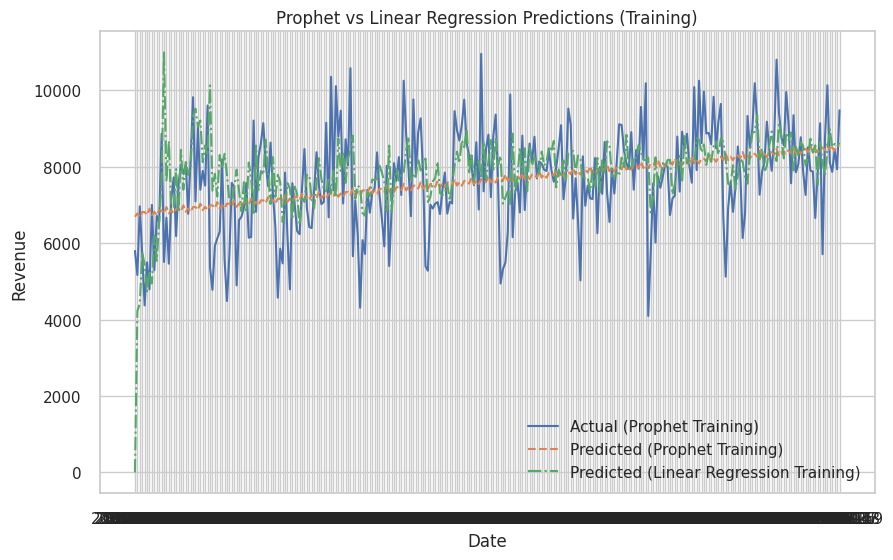
- Insights Generation: Analyze the coefficients of the model to understand the impact of each marketing channel on revenue. Identify significant contributors to revenue and their relative importance. Conduct sensitivity analysis to assess the robustness of the model to changes in marketing spend. Visualize the predicted revenue compared to actual revenue over time to validate the model’s accuracy.
RESULTS :
Overall, the goal of building ML models was to compare their performance in forecasting revenue over time. By evaluating metrics such as Mean Absolute Error (MAE), Mean Squared Error (MSE), and Root Mean Squared Error (RMSE), we aimed to identify the model that provides the most accurate forecasts for our specific dataset. Additionally, exploring different models helps us gain insights into the underlying patterns in the data and choose the most suitable approach for revenue forecasting in our business context.
In this scenario, Prophet helps us by providing a framework for time-series forecasting that automatically detects trends, seasonal patterns, and holidays in the data. It simplifies the process of building and fitting a forecasting model, making it easier for analysts and data scientists to generate accurate predictions without extensive manual feature engineering. Prophet’s ability to handle multiple sources of data and its flexibility in specifying additional parameters such as holidays and seasonality makes it a valuable tool for forecasting tasks, particularly in situations where the data exhibit complex temporal patterns.